A technical reading guide
Thickened Ground Notes
Four source-led notes on thickened tailings: what the term means, how methods compare, what a deposition plan connects, and how to review one.
This site is a reading guide. Its domain name carries an adjective from mining engineering, thickened, and rather than bury that word under something softer, this desk keeps it and reads it properly: against the two public documents that currently define good practice for tailings facilities worldwide.
Every factual claim in the notes that follow is traced to those documents, quoted short and attributed precisely, so that a reader can check any sentence against the public record in a few minutes. Nothing here is engineering advice about a particular facility, and nothing here continues the work of any previous owner of the address.
The four notes were published September 6, 2026; the sources were verified against the local copies the same day.
Why a reading guide bears this name
Thickened tailings is a real term with a precise, modest meaning: tailings from which a degree of water has been removed, so that the material handles differently from the slurry that leaves a processing plant. Because the word appears in public debates about mining safety, often as a synonym for “safer”, it deserves the slowest reading of the whole vocabulary. The first note, on what the term means, does exactly that, starting from the definitions the public guidance itself uses.
The desk publishes in English because both anchor documents are published in English first, and because the debates that misuse the vocabulary are themselves international.
What the four notes cover
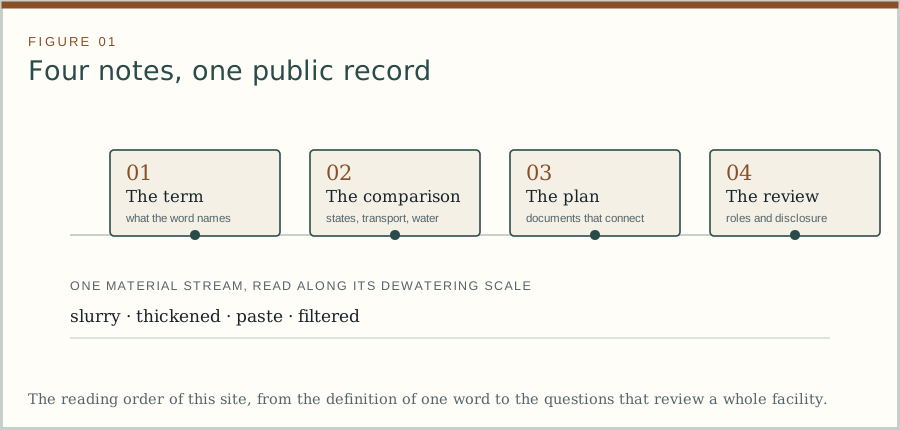
The notes are short on purpose. What thickened tailings means separates the process state from the promises people attach to it. Comparing deposition methods refuses the shortcut of ranking labels, and follows transport, water and consequence classification instead. What a deposition plan has to connect shows the document set a real plan belongs to, from the water management plan to the emergency response plan. Questions for reviewing a tailings method turns the Standard into a checklist of named roles, classifications and disclosures.
Read together, the four notes walk one question: not which method is best in the abstract, but what any method claim must show before it deserves belief.
The documents behind every claim
Two public anchors hold the site up. The sources page describes both in detail: the Global Industry Standard on Tailings Management of August 2020, with its fifteen principles and auditable requirements, and the ICMM Good Practice Guide of May 2021, which supports the Standard with sector guidance. Each note ends with the exact chapters, principles and requirements it used, and the desk quotes sparingly so the originals stay worth visiting.
How this desk reads a method claim
The house method has three moves. First, separate process descriptions from performance claims: how much water was removed says nothing by itself about stability. Second, look for named accountability: the Standard asks for Accountable Executives answerable to the chief executive, in regular communication with the board, and an empowered Engineer of Record, and documents without names tend to be documents without decisions. Third, ask what would prove the claim wrong: monitoring systems, review frequencies and public disclosure are what turn a forecast into a checkable statement.
None of these moves requires an engineering degree. They require patience, which is the only qualification this desk claims.
What this site does not do
It does not advise on the design or operation of any facility, does not rank suppliers or consultancies, names no companies as good or bad actors, and sells nothing. It claims no affiliation with the Global Tailings Review, ICMM, or any mining company, and it does not present itself as the continuation of any site that previously lived at this address. When the desk says a document supports a sentence, the citation is in the page, not in a confidence you are asked to extend.
Where to start and how to reply
Read the notes in order, term, comparison, plan, review, or start from whichever question brought you here; each note also stands alone, and each one names its sources at the foot of the page. If you find an error, write to contact@thickenedtailings.com with the sentence and your source; the desk corrects its own sentences in public, on the page, with the correction dated.